
A new research strand: experiences of weightlessness
· 3 min read
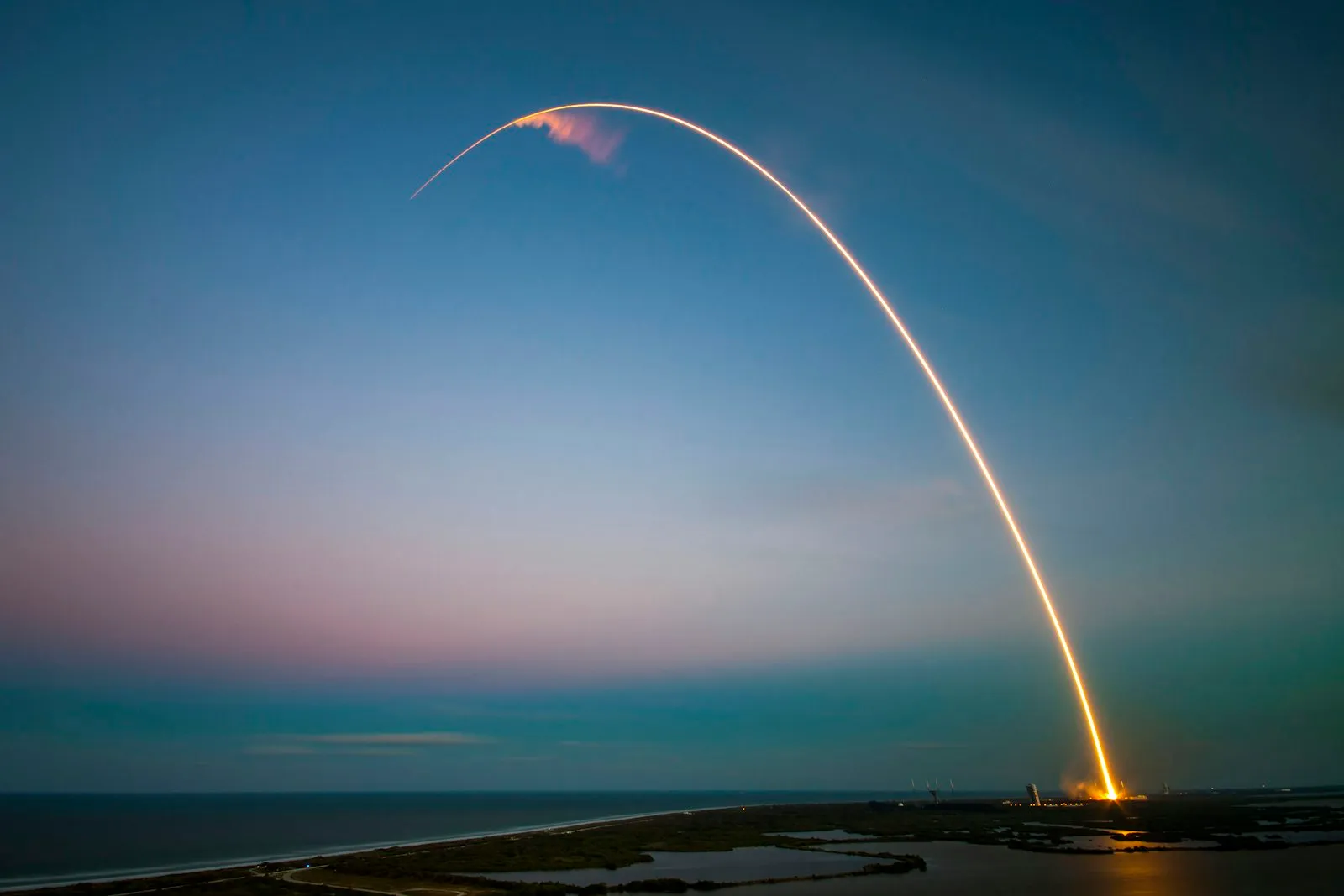
I’ve been quietly working on something new for a while, and it’s now real enough to talk about. Alongside my ongoing PhD on ayahuasca experiences, I’m opening a second strand of research at Birkbeck. This one’s on what happens to a person when their body is taken out of 1G.
You can read the overview on the Research page, but here’s what I’ll actually be doing.
The study
The project is called GRAVITY, with Professor Elisa Ferrè (Vestibular & Space Neuroscience Lab, Birkbeck) as Principal Investigator. The qualitative arm is an IPA study designed by Professor Jonathan A. Smith, my PhD supervisor; I’m running it. Same methodology I’ve used for the ayahuasca work, and the same supervisor.
The first cohort is the Hypatia Mars Arctic mission crew. I’ll be at Aeroclub Barcelona–Sabadell on Friday 8 and Saturday 9 May 2026, interviewing six participants new to parabolic flight on the day of their flight, while the experience is still fresh. Each flight runs around twenty parabolas: roughly nine seconds of weightlessness per parabola, bracketed by two-second pulls of about 3.5 to 4G.
The question
Deliberately open: how do participants experience weightlessness during a parabolic flight, and what sense do they make of it? No assumption that it’ll be transformative. No assumption that it’ll be disorientating. The point is to give space for what people actually find there.
Why this, and why now
Most of what’s known about microgravity comes from quantitative neuroscience and aerospace medicine. Both essential. Neither set up to capture what participants find meaningful, novel, or genuinely hard to put into words. There’s a growing theoretical case (Nezami & Ferrè 2025) that microgravity acts as a non-pharmacological perturbation to the brain’s “1G super-prior” (a deeply trained expectation about how bodies are supposed to behave), and that this can produce phenomenology overlapping with psychedelic states.
The lab works in an experiential-neuroscience frame: combining first-person accounts with neural and behavioural measures, on the basis that no single method reaches the whole picture. The IPA study contributes the first-person side, in close conversation with the lab’s quantitative and theoretical work.
The continuity with the ayahuasca work
People who go through ayahuasca often describe it as one of the most extraordinary things they’ve experienced, and frequently struggle to put it into words. People who’ve been in microgravity say almost the same thing. Different mechanism, similar challenge for the researcher: the experience is intense, fleeting, and not well served by closed-question scales.
So this isn’t really a pivot. It’s the same interest as before, what happens at the edges of human experience and what people do with it once they’re back, followed into a contrasting setting. One pharmacological and ceremonial; the other operational and gravitational. No drugs this time. Just gravity, and the absence of it.
What’s next
Fieldwork in May. Transcription and analysis through the summer. I’ll write up findings as they emerge, and post here when there’s something worth saying.
If you’re working in adjacent territory (spaceflight psychology, vestibular research, phenomenology of altered states), I’d be glad to hear from you. Get in touch.