
BACP bans the word 'psychedelic'
· 9 min read
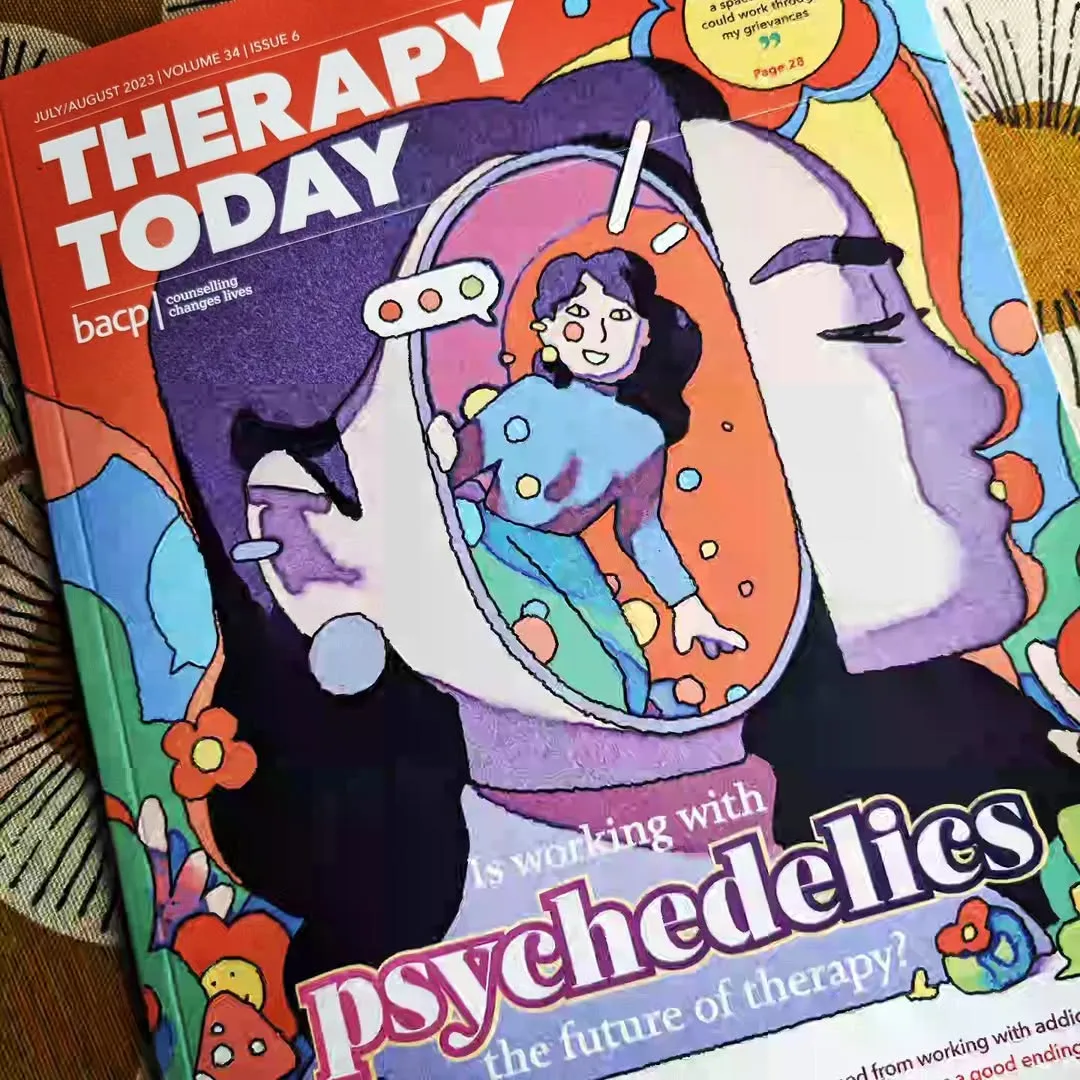
In the July/August 2023 issue of Therapy Today, the official magazine of the British Association for Counselling and Psychotherapy (BACP), an article asked: “Is working with psychedelics the future of therapy?” The article itself was even-handed. But tucked away in a box-out, in the print edition only, was an extraordinary statement of policy.
BACP’s position
BACP is aware of ongoing medical trials investigating the use of psychedelics for the treatment of psychological disorders. Currently in the UK, however, there is a wide disparity in what is meant by ‘psychedelics’ within therapy contexts.
For this reason, we do not currently accept use of the term ‘psychedelic’ to describe any element of practice as a BACP member. This includes, but is not limited to, directory listings, marketing and promotion or ‘evidence of practice’ in relation to membership or accreditation applications.
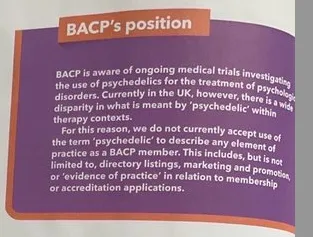
In other words, BACP members were now banned from using the word “psychedelic” in their professional descriptions. A therapist could describe their work with “plant medicine”, “magic mushrooms”, “psilocybin” or — but not “psychedelic”. This seemed incoherent and harmful.
The open letter
I wrote an open letter and invited therapists, researchers, clinicians and allies to sign:
We are psychotherapists, counsellors, researchers, clinicians and allies who want to help people exploring psychedelics to do so responsibly and minimise harm. We were pleased to see the recent article, “Is working with psychedelics the future of therapy?” (Therapy Today July/August 2023). The article is even-handed about the uses and risks of psychedelics, plus the links with talking therapies.
However, we were shocked and saddened to see the box-out statement, in the print edition, asserting that BACP members must not use the word “psychedelic” to “describe any element of practice as a BACP member”. This new rule establishes a striking taboo about how BACP members can promote their readiness to assist clients with a specific issue.
There may be legitimate concerns about this topic, but banning “psychedelic” in BACP members’ descriptions is the wrong way to address those concerns. For instance, the rule means that a BACP member may describe their work in relation to “plant medicine”, “magic mushrooms”, “psilocybin”, or but not “psychedelic”. This seems incoherent.
The new rule stops BACP members from describing important services publicly and so acts to prevent people who take psychedelics, already a marginalised minority, from finding appropriate support. A BACP member may wish to advertise their services to help clients “deal with a challenging psychedelic experience elsewhere” or “make sense of a psychedelic session”. We think these descriptions are legitimate. Does the BACP disagree?
Studies suggest that talking about challenging psychedelic experiences is vital to harm reduction and benefit maximisation. Indeed, some BACP members work as therapists on clinical psychedelic trials or for organisations providing legal Psychedelic Assisted Therapy in the UK. The new rule stops BACP members describing this work, but not doing the work itself. Again, this seems ill conceived.
If they stand by it, we ask the BACP to clarify the new rule and its provenance. Is the new rule supported by more detailed policy and guidance elsewhere e.g. has there been an update to the BACP ethical code? How was the new rule arrived at, and when was it announced? How will the new rule be enforced?
Looking ahead, we invite the BACP to engage with stakeholders, particularly amongst its own membership. We sign this letter hoping for future dialogue.
Signatories
221 people signed the letter, including notable figures in the therapy and psychedelics communities: Dr David Luke, Michelle Baker Jones, Maria Papaspyrou, Dr Tim Read and Dominic Davies.
Of the signatories:
- 31% wrote their own personal message to BACP (64 messages)
- 38% are current BACP members, with a further 9% past BACP members and 36% members of other therapy organisations
- 55% are qualified talking therapists or counsellors
- 31% are interested parties or allies
- 17% are professionals working directly with psychedelic substances (e.g. clinical trials, retreat centres)
- 6% are researchers
In their own words
A selection of messages from signatories:
“Banning a word is even less smart than banning a substance.”
“I work as a psychedelic therapist in clinical research here in the UK. This article undermines my ability to practice.”
“It seems unethical not to describe accurately the services one is providing. It is important, moreover, for those who need integration from extra-ordinary state of consciousness experiences to be able to talk about these with a trained person who has the scope of competence to listen, understand and support.”
“I specialise in treating PTSD with EMDR therapy. I have had an influx of individuals experiencing sustained dysregulation following ingesting psychedelics, and my modality is designed for this type of presentation. It also highlights the need for harm reduction in the form of proper preparation and integration for clients if they chose to pursue psychedelic therapy.”
“This statement does not seem to incorporate unconditional positive regard, as it very specifically prevents anyone who has partaken in psychedelics from finding a therapist attune to their needs. This shows bias.”
“I imagine there might always be some degree of disparity in what is meant by ‘psychedelics’ within therapy contexts. This seems unlikely to change. Rather than outlawing a word, could the emphasis instead be on supporting us in our work in this re-emerging field?”
“If this policy is applied, I will leave the BACP. There are alternative, more forward-thinking organisations that fully support my professional work with psychedelics.”
“The BACP have taken a unilateral decision regarding the use of the word ‘psychedelic’ without providing members with any evidence-based rationale for their decision. This is a frustrating and disappointing position, which shows a complete lack of understanding from one of the UK’s largest professional standards organisations in relation to the potentially biggest development in psychotherapy in the last 50 years.”
“Is this word still really taboo 70 years later?”
“I strongly encourage the BACP to get ahead of the game on this and contribute to the UK expertise in safe and effective psychedelic practice. Otherwise intractable conditions are proving responsive to such treatment. Also, without high level recognition and regulated practitioners, I believe that there will be a drift towards psychedelic treatments being sought and used in ways that are psychologically uncontained.”
“Banning this word is effectively colluding with the generic ‘drugs’ war and locking the door to people who choose to take psychedelics and choose to find professionals willing to help them integrate their experiences. It begins to push these things underground.”
“Please — inclusion not exclusion.”
Outcome
The letter was sent to Therapy Today and published in the Reactions section. Beyond a brief and dismissive response in the next issue of the magazine, the BACP has not engaged with signatories. As far as I know, the policy remains in place.